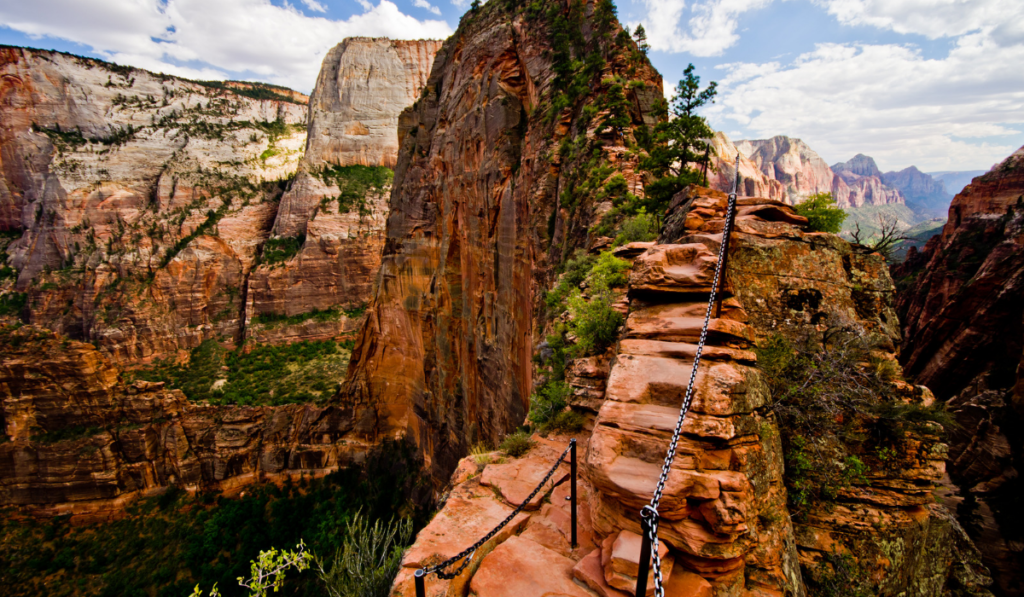
The Angels Landing hike is one of the most famous and challenging hikes in Zion National Park, Utah. Known for its narrow sandstone ridge, steep drop-offs, and chains section, this trail attracts hikers looking for an unforgettable adventure above Zion Canyon. The views from the summit are spectacular, but reaching them requires good fitness, confidence with heights, and careful attention to safety.
Unlike many other Zion hikes, Angels Landing requires a permit for the final section beyond Scout Lookout. You must enter a lottery through Recreation.gov to hike the famous chains route. This article covers how to get an Angels Landing permit, what to expect along the trail, how difficult and dangerous the hike can be, the best time to visit, and alternative Zion hikes if you do not win a permit.
Angels Landing Hike at a Glance
Here are the essential details to know before planning your hike.
- Location: Zion National Park, Springdale, Utah, USA
- Trail distance: Approximately 5.4 miles (8.7 km) round trip
- Elevation gain: Approximately 1,488 feet (454 meters)
- Hiking time: Around 4 hours for most hikers
- Difficulty: Strenuous
- Trailhead: The Grotto, Zion Canyon Shuttle Stop 6
- Highest point: Approximately 1,488 feet above the trailhead
- Permit: Required beyond Scout Lookout
- Permit system: Seasonal lottery and day-before lottery
- Best seasons: Spring and fall
- Main highlights: Refrigerator Canyon, Walter’s Wiggles, Scout Lookout, and the chains section
The hike is physically demanding, but the chains section is what makes it especially challenging. If you are uncomfortable with heights or exposed trails, you can still enjoy the hike to Scout Lookout without a permit.
Do You Need a Permit for Angels Landing?
Yes. You need an Angels Landing permit to hike the final section from Scout Lookout to the summit.
The National Park Service introduced the permit system in 2022 to manage congestion and improve visitor safety along the narrow, exposed trail. The permit requirement applies throughout the year, including weekends, weekdays, holidays, and different times of the day.
However, you do not need a permit to hike the West Rim Trail from the Grotto to Scout Lookout. This is an important distinction because Scout Lookout itself offers impressive views of Zion Canyon.
How Does the Angels Landing Permit Lottery Work?
There are two ways to get a permit:
1. Seasonal Lottery
The seasonal lottery allows you to apply several months before your planned hiking date.
The National Park Service organizes four seasonal lotteries:
- Spring: March through May
- Summer: June through August
- Fall: September through November
- Winter: December through February
The application windows generally open before each season. You can select multiple preferred hiking dates and time slots when submitting your application.
If your application is selected, you receive a permit for your assigned date and starting time.
2. Day-Before Lottery
If you do not receive a permit through the seasonal lottery, you can try the day-before lottery.
Applications open at 12:01 a.m. and close at 3 p.m. Mountain Time on the day before your intended hike. Results are announced after 4 p.m. Mountain Time.
For example, if you want to hike on Saturday, you must apply between 12:01 a.m. and 3 p.m. on Friday.
You have the same chance of being selected regardless of when you apply during the application window.
How Much Does an Angels Landing Permit Cost?
The published permit fees are:
- Application fee: $6 per application, covering a group of up to six people.
- Permit fee: $3 per person if your application is successful.
The $6 application fee is non-refundable, even if you are not selected. The successful applicant is automatically charged the additional per-person permit fee.
These charges are separate from Zion National Park’s entrance fee.
What Happens If You Hike Without a Permit?
Hiking the chains section without a valid permit is prohibited.
Park rangers may check permits at Scout Lookout or elsewhere along the route. Visitors who enter the restricted section without a permit can face enforcement action, including a fine.
You can still hike to Scout Lookout without winning the lottery, so there is no reason to risk hiking beyond the permitted area.
For the latest requirements, visit the official National Park Service Angels Landing permit information.
How to Apply for an Angels Landing Permit?
Getting a permit is straightforward once you understand the lottery process. You need an account on Recreation.gov and should plan your preferred hiking dates.
Follow these steps:
Step 1: Create a Recreation.gov account
Visit Recreation.gov and create an account before the lottery opens. Make sure your contact information and payment details are correct.
Step 2: Find the Angels Landing lottery
Search for Angels Landing permits on Recreation.gov. Choose the seasonal lottery if you are planning or the day-before lottery if your trip is approaching.
Step 3: Select your preferred dates and times
For the seasonal lottery, choose your preferred hiking dates and time slots. You can rank up to seven preferred combinations.
For the day-before lottery, select the available time-slot preferences. Flexibility can help you fit the hike into your Zion itinerary.
Step 4: Enter your group details
You can apply for a group of up to six people, including the person submitting the application.
Remember that each person hiking the permitted section needs to be included in the permit.
Step 5: Pay the application fee
Submit your application and pay the non-refundable $6 fee.
Step 6: Check your results
If selected, you will receive a confirmation email and the permit fee will be charged automatically. Download or print your confirmation before entering Zion Canyon because mobile reception can be unreliable.
Step 7: Bring your permit and identification
The permit holder or designated alternate leader must be present during the hike with the required confirmation and valid photo identification. Permits are non-transferable.
Tip: Apply for the seasonal lottery before finalizing every detail of your trip. If you are unsuccessful, keep the day-before lottery as a backup option.
Getting to the Angels Landing Trailhead
The Angels Landing trailhead is located at The Grotto, Shuttle Stop 6, along Zion Canyon Scenic Drive.
During the shuttle operating season, private vehicles are generally not allowed on Zion Canyon Scenic Drive. You need to use the park shuttle to reach the trailhead.
Using the Zion Canyon Shuttle
The Zion Canyon Shuttle is the easiest way to reach The Grotto.
Start at the Zion Canyon Visitor Center and board a shuttle heading into the canyon. Get off at Stop 6, The Grotto.
From there, cross the road and the bridge over the Virgin River. You will find the West Rim Trail entrance on the other side.
The park shuttle is free, and you do not need a separate shuttle reservation or ticket. However, you still need to pay the park entrance fee.
Parking in Springdale
If you are driving to Zion, you can park at the visitor center if spaces are available. Parking often fills early, particularly during weekends and busy travel seasons.
Another option is to park in Springdale and use the free town shuttle to reach the pedestrian entrance of Zion National Park. From there, walk to the visitor center and board the Zion Canyon Shuttle.
The shuttle schedule changes throughout the year, so check the official Zion National Park shuttle information before your hike.
If you enjoy planning around shuttles and timed access, the Maroon Bells hiking experience in Colorado is another bucket-list US mountain destination where advance transportation planning is important.
Angels Landing Trail Guide: What to Expect
The Angels Landing hike begins at The Grotto and follows the West Rim Trail before reaching Scout Lookout. From there, hikers with permits continue along the famous chains section to the summit.
Here is what to expect along the route.
1. The Grotto to Refrigerator Canyon
Your hike starts at The Grotto, where you cross the bridge and follow the West Rim Trail.
The trail begins with a steady uphill climb through the sandstone landscape. You will gradually gain elevation as the path moves away from the Virgin River.
After the initial climb, you reach Refrigerator Canyon. This narrow canyon section offers some shade and a welcome change from the exposed trail.
The walking here is relatively comfortable compared with the sections ahead, although you will continue gaining elevation.
2. Walter’s Wiggles
After Refrigerator Canyon, you reach Walter’s Wiggles, a famous series of steep switchbacks carved into the sandstone.
There are 21 tight switchbacks that climb toward Scout Lookout. This section is physically demanding because you gain elevation over a relatively short distance.
Take your time and use the switchbacks to maintain a steady pace. You do not need to rush, especially if you are hiking during warmer weather.
3. Scout Lookout
Scout Lookout is one of the most important stopping points on the trail.
After climbing Walter’s Wiggles, you reach an open area with impressive views across Zion Canyon. This is also where the permit checkpoint may be located.
If you do not have an Angels Landing permit, you must stop here. You can rest, enjoy the scenery, and take photographs without continuing onto the chains section.
For hikers who are uncomfortable with heights, Scout Lookout is a rewarding destination on its own.
4. The Angels Landing Chains Section
If you have a valid permit and feel comfortable continuing, you can enter the famous chains section.
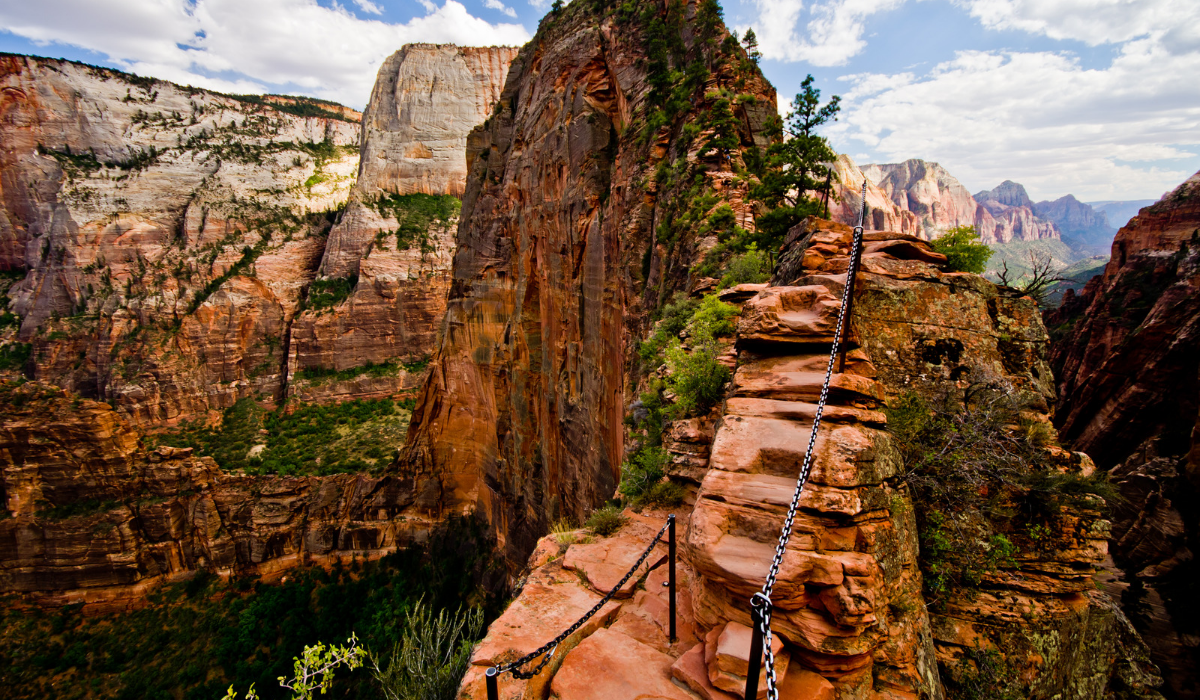
This is the most exposed part of the entire hike. The trail follows a narrow sandstone ridge with steep drop-offs on both sides.
Metal chains are installed along several sections to provide handholds as you climb and descend the rocky route. Some areas are narrow enough that hikers need to coordinate with people traveling in the opposite direction.
You will need to use both your hands and feet to move safely through certain sections. Keep your attention on the trail, maintain a secure grip where appropriate, and give other hikers room to pass.
Do not feel pressured to continue if the exposure makes you uncomfortable. You can turn around at any point.
5. Reach the Angels Landing Summit
After navigating the chains section, you reach the summit of Angels Landing.
The views stretch across Zion Canyon, with enormous sandstone cliffs, winding canyon walls, and the Virgin River visible below.
Take a break, drink water, and enjoy the scenery. Be careful near the edges, and avoid moving close to exposed areas for photographs.
When you are ready, return along the same route to Scout Lookout and descend the West Rim Trail to The Grotto.
How Hard and How Scary Is Angels Landing?
The Angels Landing hike is strenuous and involves significant exposure. It is not simply a difficult uphill walk; the narrow ridge and steep drop-offs make the final section especially challenging.
You need good physical fitness, balance, coordination, and confidence moving along exposed terrain.
Is Angels Landing Dangerous?
Yes, there are genuine risks.
The trail has cliffs, narrow sections, and areas where a slip could result in a serious fall. The chains provide handholds, but they do not eliminate the danger.
Crowds can also make the experience more challenging. Hikers moving in opposite directions sometimes need to wait or carefully coordinate their movements on narrow sections.
Weather creates additional risks. Rain can make sandstone slippery, while strong winds and thunderstorms make exposed ridgelines particularly dangerous.
Do You Need to Be Fit?
You should be comfortable hiking several miles with a substantial elevation gain.
The first part of the route is already strenuous because of the uphill climb to Scout Lookout. The chains section requires additional physical effort and confidence.
If you regularly hike steep trails and can maintain your balance on uneven ground, you may find the physical challenge manageable. However, fitness alone does not make someone comfortable with exposure.
Is Angels Landing Suitable for Children?
The trail is not a casual family hike.
The chains section requires careful movement and the ability to understand and respond to exposed terrain. Parents should honestly assess their children’s experience, confidence, and ability to follow safety instructions.
A child who is uncomfortable with heights should not be pressured to continue. Scout Lookout offers a better alternative for families who want to enjoy the views without tackling the exposed ridge.
Safety Tips and Trail Rules
Safety should be your priority throughout the Angels Landing hike. Even experienced hikers need to remain careful because the route combines steep terrain, exposure, and changing weather.
Keep these tips in mind:
- Check the weather: Avoid hiking during thunderstorms, heavy rain, or strong winds.
- Wear proper footwear: Use hiking shoes with reliable traction and a secure fit.
- Keep your hands free: Store your phone and camera safely before entering exposed sections.
- Use the chains carefully: Maintain a secure grip and avoid rushing through narrow areas.
- Respect other hikers: Give people room to move and be patient when passing.
- Stay on the marked trail: Do not attempt shortcuts or climb outside the designated route.
- Carry enough water: Zion can become extremely hot, especially during summer.
- Avoid the trail during lightning: Exposed ridges are dangerous during thunderstorms.
- Watch your footing: Loose sand and pebbles on sandstone can be slippery.
- Know when to turn back: If you feel uncomfortable, tired, or unsafe, there is no shame in stopping.
Tip: Check the National Weather Service forecast for the Springdale and Zion Canyon area before leaving. Also review the park’s current trail conditions and closure notices.
Best Time to Hike Angels Landing
The best time to hike Angels Landing is generally spring and fall, when temperatures are more comfortable than during the hottest summer months.
However, every season has different advantages and challenges.
March
March marks the beginning of the spring hiking season. Temperatures are generally cooler, although mornings can be cold and occasional snow or ice may affect the trail.
Check current conditions before starting.
April
April is an excellent month for hiking in Zion. Temperatures are often comfortable, and the surrounding landscape begins to show more spring growth.
Visitor numbers also increase during spring break and Easter holidays, so expect crowds.
May
May offers generally favorable hiking conditions, with warmer days and longer daylight hours.
Start early to avoid the afternoon heat and busy trail conditions.
June
June can be hot, particularly around midday. If you plan to hike during this month, begin early and carry sufficient water.
July and August
July and August are among the hottest months in Zion. Daytime temperatures can exceed 100°F (38°C).
These months also bring an increased risk of thunderstorms and flash flooding during the summer monsoon season.
Avoid hiking during dangerous weather and pay close attention to park warnings.
September
September is a good month for hiking as temperatures begin to become more comfortable.
However, the monsoon season can continue into September, so check the forecast before heading out.
October
October is one of the most attractive months for hiking Angels Landing. Cooler temperatures and autumn colors make the surrounding canyon scenery especially beautiful.
It is also a popular time to visit, so start early.
November
November offers cooler weather and fewer visitors compared with peak summer months.
Mornings can be cold, and daylight hours are shorter. Dress in layers and check the forecast.
December to February
Winter hiking is possible when trail conditions are safe, but cold temperatures, ice, and snow can make exposed sections more difficult.
Avoid the chains section if ice or dangerous conditions are present.
Best overall recommendation: April, May, October, and early November are excellent periods to consider, depending on weather and trail conditions.
Spring is also peak waterfall season at Yosemite, where the best time to see Yosemite’s waterfalls depends on snowmelt and seasonal conditions.
What to Pack for Angels Landing
You do not need technical climbing equipment for the standard Angels Landing hike, but you should carry the essentials for a strenuous mountain trail.
- Hiking shoes: Choose footwear with good traction and a secure fit.
- Water: Carry enough drinking water for the entire hike.
- Snacks: Pack energy bars, fruit, nuts, or sandwiches.
- Sun protection: Bring sunscreen, sunglasses, and a hat.
- Lightweight backpack: Choose a small daypack that does not interfere with your balance.
- Weather protection: Carry a lightweight jacket and extra layers.
- First-aid supplies: Pack basic blister care and personal medication.
- Navigation: Download an offline park map.
- Phone: Keep it charged, but store it securely in exposed areas.
- Headlamp: Useful if your hike takes longer than expected.
- Permit confirmation: Save your permit offline or carry a printed copy.
- Identification: Bring the required photo ID for permit verification.
Avoid carrying unnecessary heavy equipment. A lighter backpack makes the steep climb and chains section easier to manage.
No Angels Landing Permit? Five Great Alternatives in Zion
Not getting an Angels Landing permit does not mean you have to miss out on Zion’s incredible scenery.
The park has several other hiking routes that offer beautiful viewpoints, canyon landscapes, and memorable experiences.
1. Scout Lookout
Scout Lookout is the best alternative if you originally planned to hike Angels Landing.
You follow the same West Rim Trail from The Grotto, climb Walter’s Wiggles, and reach the viewpoint without needing a permit.
The round-trip distance is approximately 4.5 miles (7.2 km), and the route gains around 1,000 feet (305 meters) in elevation.
It is strenuous, but you avoid the exposed chains section.
2. Observation Point
Observation Point is another excellent destination for panoramic views of Zion Canyon.
The traditional route from Zion Canyon is currently affected by an East Rim trail closure. However, you can reach Observation Point using the East Mesa Trail when access is open.
This approach starts outside the main canyon and offers a different hiking experience.
Check the latest access, road, and trail conditions before making plans.
3. Canyon Overlook Trail
The Canyon Overlook Trail is a shorter option with impressive views of Zion Canyon.
The trailhead is located near the east entrance of the Zion-Mount Carmel Tunnel. The hike is approximately 1 mile (1.6 km) round trip, with rocky sections and some uneven terrain.
The viewpoint at the end overlooks the dramatic sandstone formations of the main canyon.
Parking is limited, so arrive early if you want to find a space.
4. The Narrows
The Narrows is one of Zion’s most famous hiking experiences. Instead of climbing a mountain ridge, you walk through the Virgin River between enormous sandstone canyon walls.
The hike involves walking in water over slippery river stones, so proper footwear and a walking stick are useful.
Conditions can change quickly, and flash flooding is a serious risk. Check river flow, weather forecasts, and official closures before entering the canyon.
5. Emerald Pools
Emerald Pools offers a more relaxed hiking experience with beautiful sandstone scenery and seasonal waterfalls.
The trail system includes Lower, Middle, and Upper Emerald Pools. You can choose a shorter walk or extend your hike depending on your fitness and available time.
It is a good alternative if you want to enjoy Zion’s scenery without tackling the exposed Angels Landing ridge.
Where to Stay Near Zion National Park
Choosing accommodation close to the park makes it easier to reach the shuttle early and enjoy more time on the trails.
Here are three practical options.
Springdale
Springdale is the most convenient town for most visitors.
It is located directly outside Zion’s south entrance and offers hotels, motels, restaurants, shops, and shuttle connections to the park.
You can leave your vehicle at your accommodation and use the Springdale shuttle to reach the park entrance.
Accommodation ranges from budget motels to comfortable hotels and premium resorts.
Zion Lodge
Zion Lodge is located inside Zion Canyon and offers one of the most convenient places to stay.
You can access several hiking routes directly from the lodge area and avoid some of the transportation logistics associated with staying outside the park.
Rooms and cabins are limited, so book early if you want to stay here.
Camping Near Zion
Camping is another option if you prefer staying closer to nature.
Watchman Campground is located near the south entrance and is convenient for accessing the Zion Canyon Shuttle. South Campground and Lava Point Campground have seasonal operating arrangements.
Reservations are important, especially during spring, summer, and fall.
Check the National Park Service camping information for current availability and booking requirements.
Common Mistakes to Avoid on the Angels Landing Hike
A little planning can help you avoid unnecessary problems.
Here are some mistakes to watch out for:
- Assuming you do not need a permit: You need a permit for the chains section, even if you arrive early.
- Applying too late: Try the seasonal lottery before relying on the day-before option.
- Starting too late: Afternoon heat and changing weather can make the hike more difficult.
- Ignoring shuttle times: Missing the last shuttle can create a long walk back to the visitor center.
- Wearing unsuitable shoes: Poor traction increases the risk of slipping on sandstone.
- Carrying too much equipment: A heavy backpack makes the steep sections more tiring.
- Underestimating the chains section: The exposed ridge requires confidence and careful movement.
- Ignoring weather warnings: Never continue onto the exposed ridge during dangerous weather.
- Taking unnecessary risks for photos: Stay away from cliff edges and keep your attention on the trail.
Final Thoughts: Is the Angels Landing Hike Worth It?
The Angels Landing hike is one of the most memorable hiking experiences in Zion National Park, but it is not a trail everyone should attempt.
The steep climb, Walter’s Wiggles, narrow ridge, and famous chains section make it a challenging adventure that requires physical fitness and confidence with heights. The summit rewards prepared hikers with spectacular views across Zion Canyon.
If you receive an Angels Landing permit and the weather is suitable, the hike can be an unforgettable part of your Utah trip. If you do not get a permit or decide the exposure is not right for you, Scout Lookout, Canyon Overlook, Observation Point, and Emerald Pools offer excellent alternatives.
You can discover more hiking routes across North America when planning your next outdoor adventure. For more hiking and travel inspiration, visit Paradox Traveller.
Frequently Asked Questions About the Angels Landing Hike
1. Do you need a permit to hike Angels Landing?
Yes. You need a permit to hike the final section from Scout Lookout to the Angels Landing summit. Permits are issued through seasonal and day-before lotteries on Recreation.gov. You do not need a permit to hike to Scout Lookout.
2. How difficult is the Angels Landing hike?
Angels Landing is a strenuous hike covering approximately 5.4 miles (8.7 km) round trip, with around 1,488 feet (454 meters) of elevation gain. The chains section is particularly challenging because of its narrow ridge and steep drop-offs.
3. How long does it take to hike Angels Landing?
Most hikers take around 4 hours to complete the round-trip hike. Your time may vary depending on fitness, crowds, weather, and how long you spend at the summit.
4. Is Angels Landing dangerous?
Yes. The trail has steep cliffs, exposed ridges, and narrow sections where a fall could cause serious injury or death. Chains provide handholds, but they do not remove the risks. Avoid the hike if conditions are unsafe or you are uncomfortable with heights.
5. Can you hike Angels Landing without a permit?
You can hike from The Grotto to Scout Lookout without a permit. However, you cannot continue beyond Scout Lookout onto the chains section without a valid Angels Landing permit.
6. What is the best time to hike Angels Landing?
Spring and fall are generally the best seasons. April, May, October, and early November often offer more comfortable hiking temperatures. Always check weather forecasts and trail conditions before starting.
7. What happens if you do not win the Angels Landing lottery?
You can apply through the day-before lottery on Recreation.gov. If you are unsuccessful again, you can still hike to Scout Lookout without a permit or choose another Zion trail, such as Canyon Overlook, Emerald Pools, or the East Mesa route to Observation Point.
8. Can beginners hike Angels Landing?
Beginners with good fitness may be able to manage the uphill climb to Scout Lookout, but the exposed chains section is not suitable for everyone. You should have experience on strenuous hiking trails, be comfortable with heights, and understand the risks before attempting the summit.