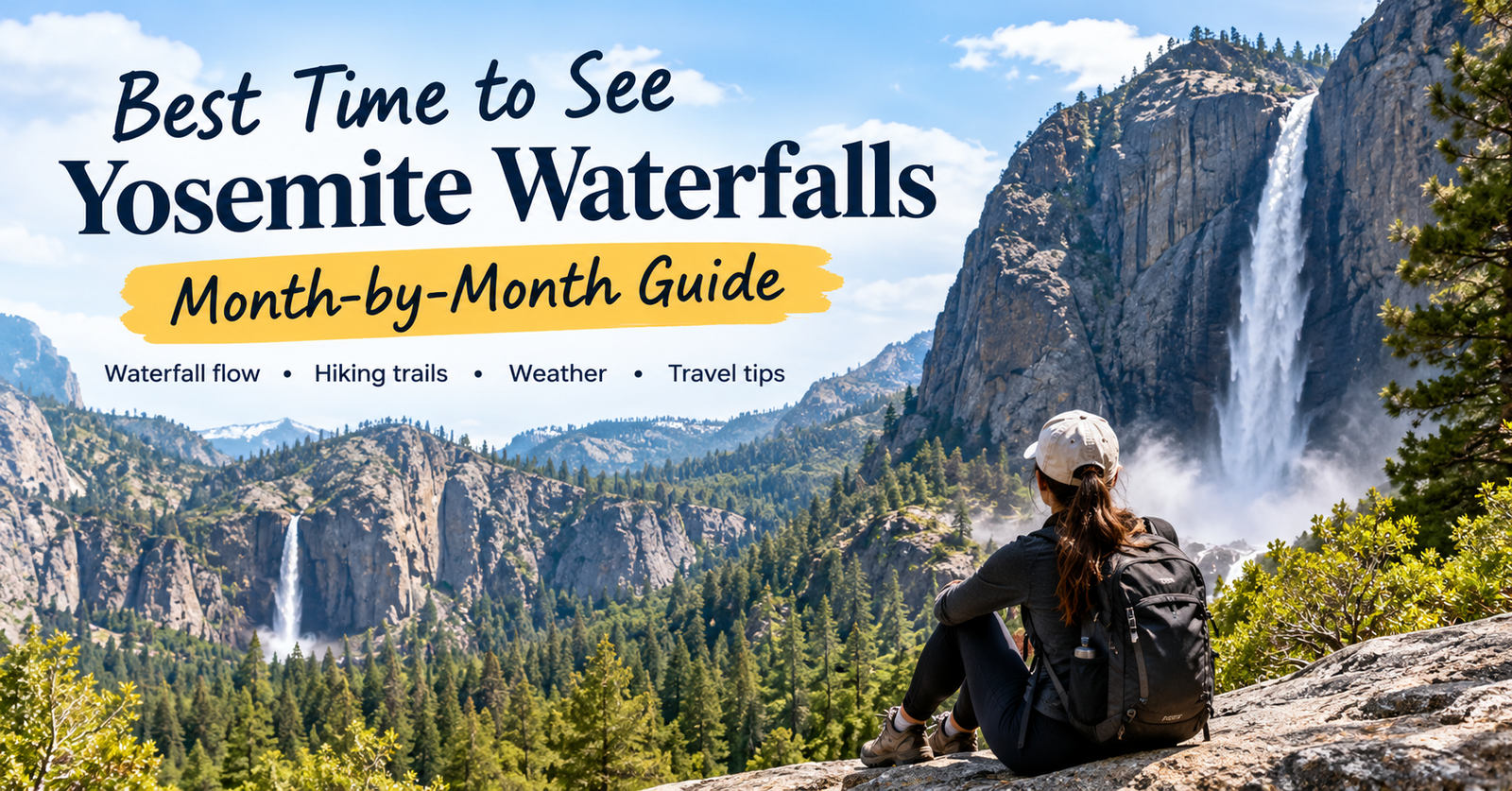
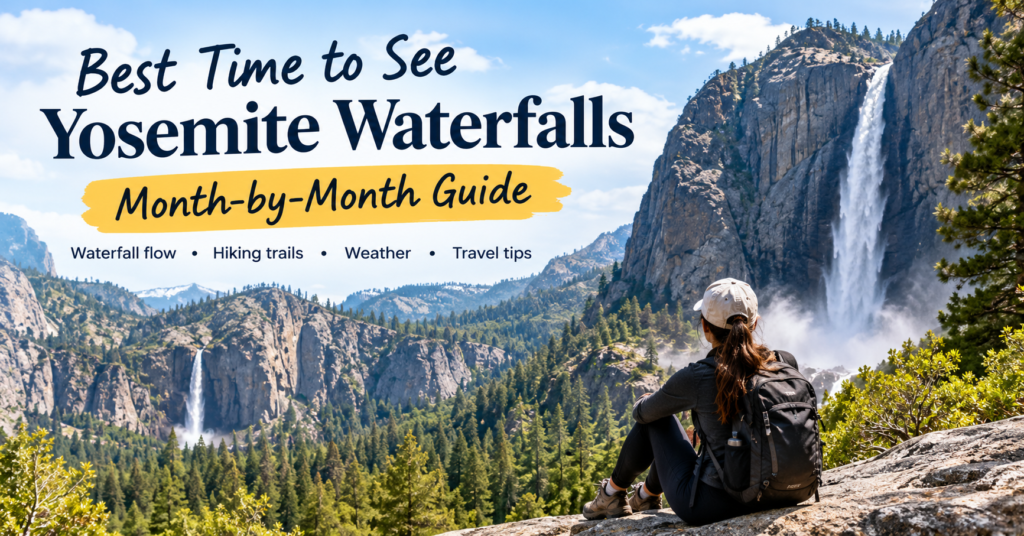
The best time to see Yosemite waterfalls is generally April through June, when melting mountain snow feeds the park’s spectacular waterfalls. May is often an excellent month for strong water flow, although June can be just as impressive in years with heavy winter snowfall.
I’m Martha, a solo female traveler, and I believe planning around the seasons can make a big difference to your outdoor adventures. In this guide, I’ll explain the best time to see Yosemite Falls, Bridalveil Fall, Vernal Fall, and other beautiful waterfalls throughout the year. I’ll also cover hiking trails, weather, crowds, and practical tips for planning your visit.
Remember that waterfall flow changes every year. Winter snowpack, spring temperatures, and rainfall all influence how much water you’ll see. Before your trip, check current conditions on the National Park Service website: https://www.nps.gov/yose/.
Quick Answer: When Is the Best Time to See Yosemite Waterfalls?
- Peak season: April through June is generally best for powerful waterfall flow.
- Yosemite Falls: May is often an excellent month, although the timing of peak flow varies.
- Bridalveil Fall: Spring, particularly April and May, often brings stronger flow.
- Vernal Fall and Nevada Fall: Late spring and early summer can offer impressive water flow, depending on snowmelt and trail access.
- Horsetail Fall: Mid-to-late February offers the possibility of seeing the famous Firefall effect.
- Wapama Falls: Spring is often a good time to see increased snowmelt runoff.
- Illilouette Fall: Spring generally offers the best chance of seeing stronger seasonal flow.
- Late summer: Yosemite Falls may slow considerably or dry up, although other waterfalls can behave differently.
Why Snowmelt Matters?
Many Yosemite waterfalls depend heavily on snowmelt from the Sierra Nevada mountains. As temperatures rise in spring, melting snow feeds streams and rivers, sending water over the granite cliffs surrounding Yosemite Valley.
This is why Yosemite in spring looks different from the park in late summer. During a strong snowmelt season, waterfalls can produce impressive cascades, rushing sounds, and mist that reaches nearby trails.
Why Waterfall Flow Changes Every Year?
Winter snowfall is one of the biggest factors affecting Yosemite waterfalls, but spring temperatures also matter. A heavy snowpack followed by gradual warming can sustain waterfall flow longer, while an unusually warm spring can accelerate snowmelt.
Rainfall and the water sources feeding individual waterfalls also affect their appearance. Check recent waterfall reports rather than assuming that a particular month will always offer peak flow.
When Does Yosemite Falls Dry Up?
Yosemite Falls is largely snowmelt-fed and typically reaches its strongest flow during spring. As the snow melts away, the waterfall gradually weakens and may dry up during late summer.
August is often a risky month if seeing Yosemite Falls at full flow is your main goal. The exact timing depends on the year’s snowpack and weather, so check current conditions before booking your trip.
Yosemite Waterfalls by Month
January: Winter Waterfall Views
Waterfalls: Rain and melting snow can keep some waterfalls flowing. Horsetail Fall may also be active, depending on conditions.
Weather and crowds: Expect cold temperatures, possible snow and ice, and changing road conditions. Holiday periods can still bring visitors.
My tip: Pack warm layers and waterproof footwear. Check road conditions before driving and avoid icy trails unless they are safe for your experience level.
February: Look for the Firefall Effect
Waterfalls: February is famous for Horsetail Fall’s Firefall effect, when the setting sun can illuminate the flowing water orange. The effect requires sufficient water, clear skies, and suitable sunlight.
Weather and crowds: Winter conditions can include rain, snow, and ice. Popular Firefall viewing areas may experience heavy crowds and special traffic arrangements.
My tip: Keep your plans flexible and check official viewing guidance before traveling. The effect is never guaranteed, and special rules may apply.
March: The Start of Spring Runoff
Waterfalls: Rainfall and rising temperatures can increase water flow. Some years bring impressive waterfalls in March, while colder conditions delay the spring runoff.
Weather and crowds: Expect changeable weather, including rain, chilly mornings, and possible snow. Spring-break periods can be busier.
My tip: Bring waterproof clothing and check hiking conditions before choosing a trail. Confirm whether your preferred route is open.
April: A Great Month for Waterfall Watching
Waterfalls: April is often an excellent time to see Yosemite’s waterfalls building toward peak flow. Yosemite Falls, Bridalveil Fall, and Vernal Fall can become particularly impressive.
Weather and crowds: Spring weather can change quickly. Some days are pleasant, while others bring rain, cold temperatures, or lingering snow and ice.
My tip: Start early to enjoy popular viewpoints before the busiest hours. Pack layers and shoes with good traction.
May: One of the Best Months to Visit
Waterfalls: May is often one of the strongest months for waterfall viewing. Yosemite Falls and Bridalveil Fall commonly have substantial flow, while Vernal Fall and Nevada Fall can also be impressive.
Weather and crowds: Temperatures generally become warmer, although higher elevations may still have snow. Visitor numbers increase as spring progresses.
My tip: If waterfalls are your main priority, May is an excellent month to consider. Reserve accommodation early and check trail openings before planning longer hikes.
June: Strong Waterfalls and Longer Days
Waterfalls: June can offer excellent waterfall viewing, particularly after a snowy winter. However, waterfalls may already be declining in years with low snowfall or early snowmelt.
Weather and crowds: Days are generally warmer, and summer visitors begin arriving in larger numbers. Road and trail access at higher elevations depends on seasonal conditions.
My tip: Compare May and June using recent waterfall reports. Don’t assume June will always offer stronger flow just because the weather is warmer.
July: Enjoy the Waterfalls That Remain
Waterfalls: Snowmelt-fed waterfalls often lose strength in July. Yosemite Falls may have much less water, while other waterfalls can continue flowing at reduced levels.
Weather and crowds: Yosemite Valley can be hot and busy, especially around popular viewpoints and trailheads.
My tip: Visit early in the day and check waterfall conditions before making a special trip to Yosemite Falls.
August: Lower Waterfall Flow
Waterfalls: August is generally not the best time to see Yosemite Falls at peak flow. Depending on the year, it may be reduced to a trickle or dry up entirely.
Weather and crowds: Warm weather is common in Yosemite Valley. Regional wildfire smoke can also affect air quality and visibility.
My tip: Explore several areas rather than relying on one waterfall. Check current fire information and air quality before heading out.
September: A Different Kind of Yosemite Visit
Waterfalls: Many snowmelt-fed waterfalls are low by September, and Yosemite Falls may be dry. Recent precipitation can change conditions.
Weather and crowds: Temperatures begin to ease at times, although warm afternoons remain possible. Weekends and holidays can still be busy.
My tip: If waterfall flow is your main priority, check recent reports before choosing September. You can still enjoy hiking, scenic viewpoints, and the surrounding landscape.
October: Autumn Scenery and Less Water
Waterfalls: October is generally a quieter period for snowmelt-fed waterfalls. Autumn storms may increase flow, but conditions vary.
Weather and crowds: Days can be pleasant, while mornings and evenings become cooler. Some higher-elevation roads and trails may close as winter approaches.
My tip: Treat waterfalls as one part of your itinerary and check road conditions before traveling to higher elevations.
November: Watch for Rain-Driven Flow
Waterfalls: Autumn storms can increase waterfall flow, although the amount of water depends on recent precipitation. Snow may return to higher elevations.
Weather and crowds: Expect cooler temperatures, shorter days, and possible rain or snow. Some seasonal roads and facilities may be closed.
My tip: Pack for changing weather and check current conditions before leaving your accommodation.
December: Winter Scenery and Seasonal Changes
Waterfalls: Rain and melting snow can keep some waterfalls flowing. Horsetail Fall may flow during winter, but the famous Firefall effect is associated with suitable February conditions.
Weather and crowds: Snow, ice, and cold temperatures can affect road and trail access. Holiday periods can bring additional visitors.
My tip: Focus on accessible viewpoints and check the latest park updates before driving or hiking.
My recommendation: Start by considering May, then compare April and June based on that year’s snowpack. Conditions vary, so use the calendar as a guide rather than a guarantee.
The Best Waterfalls in Yosemite and When to See Each
Yosemite Falls
Yosemite Falls is one of Yosemite National Park’s most recognizable sights. Its three sections the Upper Fall, middle cascades, and Lower Fall combine for a total height of 2,425 feet.
Best time: April and May are often excellent for strong flow, with June also worth considering in snowy years. The waterfall may dry up by late summer.
Bridalveil Fall
Bridalveil Fall drops 620 feet and is known for the mist that can drift from its base. It is one of the famous waterfalls visitors encounter in Yosemite Valley.
Best time: Spring, particularly April and May, often brings stronger flow. Bring a waterproof layer when the wind carries spray toward the viewing area.
Vernal Fall
Vernal Fall is a powerful waterfall along the Mist Trail. During periods of strong flow, hikers may experience substantial spray near the waterfall.
Best time: Late spring is often excellent, although water levels and trail access vary. Wear shoes with good traction and follow posted safety instructions.
Nevada Fall
Nevada Fall is another spectacular waterfall reached by hiking routes from Yosemite Valley. The surrounding granite cliffs make it a rewarding destination for hikers prepared for a longer outing.
Best time: Late spring and early summer can offer impressive flow. Check trail conditions and allow enough time for the hike.
Horsetail Fall
Horsetail Fall flows over the eastern side of El Capitan. It is famous for the Firefall effect, when the setting sun can make the water appear orange.
Best time: Mid-to-late February offers the possibility of seeing this effect. Flowing water, clear skies, and suitable sunlight must align, and the result is never guaranteed.
Check current National Park Service guidance because viewing arrangements and restrictions may apply.
Wapama Falls
Wapama Falls is located in Yosemite’s Hetch Hetchy area. It offers a different waterfall experience from the famous viewpoints in Yosemite Valley.
Best time: Spring is often a good choice because snowmelt can increase flow. Check trail conditions and current safety information before visiting.
Illilouette Fall
Illilouette Fall is visible from certain viewpoints along hiking routes in the Glacier Point area. It can be overlooked by visitors who focus only on Yosemite Valley’s most famous waterfalls.
Best time: Spring, when snowmelt can increase flow. Your view will depend on the route you take and current trail access.
Best Hikes to See Yosemite’s Waterfalls
Mist Trail
The Mist Trail is a popular route for seeing Vernal Fall and continuing toward Nevada Fall. The hike to the Vernal Fall footbridge is approximately 1.6 miles round trip with about 400 feet of elevation gain; continuing to the top of Vernal Fall via the Mist Trail is approximately 2.4 miles round trip with about 1,000 feet of elevation gain. The longer route is strenuous, and distances and access should be verified before publication.
Bring water, sturdy hiking shoes, and a waterproof jacket. Spray can make the trail slippery, and seasonal closures may affect access.
Lower Yosemite Fall Trail
This approximately 1-mile loop is a good option for visitors who want waterfall views without a strenuous hike. It offers views of Lower Yosemite Fall and the surrounding granite cliffs.
Wear comfortable walking shoes and bring water and a camera. Check current accessibility information, especially during icy weather.
Upper Yosemite Fall Trail
The Upper Yosemite Fall Trail is a challenging hike that climbs toward the top of Yosemite Falls and offers expansive views of Yosemite Valley. It is approximately 7.2 miles round trip with around 2,700 feet of elevation gain; verify these figures against current official trail information before publishing.
Bring plenty of water, food, sun protection, and sturdy footwear. Start early, check trail conditions, and allow enough time to complete the hike safely.
Planning Tips for Your Yosemite Waterfall Trip
Plan Around Crowds
Spring attracts visitors hoping to see powerful waterfalls, while summer is popular for hiking and sightseeing. Arriving early can make parking and popular viewpoints easier to manage.
Consider visiting on a weekday if your schedule allows. Plan your main waterfall stops for the morning and leave some flexibility for the rest of the day.
Check Parking and Shuttle Information
Parking can fill up quickly in Yosemite Valley during busy periods. Check current parking information and shuttle schedules before your visit, as routes and operating hours can change seasonally.
Check Road and Trail Closures
Snow, ice, rockfall, runoff, and maintenance can affect access to different parts of Yosemite. Check current park conditions before setting out, particularly if you plan to hike the Mist Trail or travel to higher elevations.
Verify Reservations and Permits
Entry reservations and permit requirements can change by season and year. Check the current rules before booking nonrefundable travel arrangements.
Some activities, including the Half Dome cable route, require separate permits. Don’t assume that an entry reservation covers every activity.
Prepare for Mist Trail Spray
Strong waterfall flow can leave the Mist Trail wet and slippery. Wear a waterproof jacket, choose shoes with good traction, and protect your phone and camera from water.
Stay on established trails, keep away from dangerous river edges, and follow posted warnings.
Don’t Depend on Cell Service
Cell service can be unreliable in mountainous and remote areas. Download offline maps and save important information before leaving your accommodation.
If you’re hiking alone, share your plans with someone, carry sufficient water and food, and have a backup route in case a trail closes.
Where to Stay in Yosemite?
Your accommodation can influence how much time you spend driving to waterfall viewpoints. Staying in Yosemite Valley can make early-morning visits more convenient, while accommodation outside the valley may suit travelers exploring several areas.
Compare travel times, availability, and seasonal road access before choosing where to stay. Spring is popular for waterfall trips, so booking ahead is sensible.
You can also explore my treks and hiking adventures for inspiration when planning future outdoor trips.
My Experience: Planning a Yosemite Waterfall Adventure
As a solo female traveler, I like to plan outdoor adventures around the experience I want most. For Yosemite, that means paying attention to the season, checking trail conditions, and allowing enough time to enjoy the scenery without rushing from one viewpoint to another.
If I were planning a trip specifically to see Yosemite’s waterfalls, I would start by considering May. Spring snowmelt can make Yosemite Falls, Bridalveil Fall, and Vernal Fall particularly impressive, while the surrounding valley offers plenty of opportunities for photography.
I would also keep June in mind, especially if the winter snowpack had been substantial. Before choosing my dates, I would check current waterfall reports rather than assuming the same month delivers the same experience every year.
For hiking, I would pack sturdy shoes, a waterproof jacket, drinking water, snacks, and offline maps. I would start early, check for closures, and let someone know my plans before heading out on a longer trail.
My biggest planning tip is to stay flexible. Waterfalls change with the seasons, and even when the water is lower than expected, Yosemite’s granite cliffs and mountain scenery can make the trip worthwhile.
Plan Your Yosemite Waterfall Adventure
If seeing Yosemite’s waterfalls at their fullest is high on your travel list, start by considering April, May, and June. Compare your dates with the current snowpack and waterfall reports, and choose hikes that match your experience and fitness level.
I hope this guide helps you plan a memorable Yosemite trip. For more travel inspiration, read my guide to the best places to visit in the USA in June for another beautiful mountain destination.
Frequently Asked Questions About Yosemite Waterfalls
Does Yosemite Falls dry up?
Yes. Yosemite Falls typically reaches peak flow in spring and may dry up by late summer. The timing depends on winter snowfall and spring temperatures, so check current conditions before visiting.
Is winter a good time to see Yosemite’s waterfalls?
Winter can be a good time to see waterfalls, particularly when rain or melting snow increases their flow. However, snow, ice, and road closures can affect access, so check park conditions before traveling.
What is the best month for waterfall photography?
May is often an excellent choice because many waterfalls have substantial flow during spring snowmelt. April and June can also offer beautiful conditions, depending on the year.
Is May or June better for Yosemite waterfalls?
May is often a strong starting point if your priority is powerful waterfall flow. June can be just as rewarding after a snowy winter, but waterfalls may peak earlier in years with less snowfall.
Can you swim near Yosemite’s waterfalls?
Swimming near waterfalls can be dangerous because of powerful currents, slippery rocks, and sudden changes in water conditions. Follow posted signs and official park safety guidance, and never enter hazardous river areas.
Is Yosemite crowded in spring?
Yes, spring can be busy, particularly when waterfalls are flowing strongly. Arriving early, visiting on weekdays when possible, and checking parking information can make your trip easier.
What should I wear on the Mist Trail?
Wear sturdy shoes with good traction and bring a waterproof jacket when waterfall spray is strong. The trail can be wet and slippery, and colder weather can make damp clothing uncomfortable.
Do I need a reservation to visit Yosemite?
Reservation requirements can change depending on the season and year. Check current National Park Service guidance before your visit, and remember that permits for specific activities may be separate from park entry requirements.